Guides
Home EV charging guides
Get help with choosing a charger, planning installation, understanding costs and sorting out charging problems.
All guides
Find the answer you need
Choose a guide about your car, home or charging routine. You can read them in any order.
What you actually pay, and what changes the number
How much does it cost to charge an electric car at home?
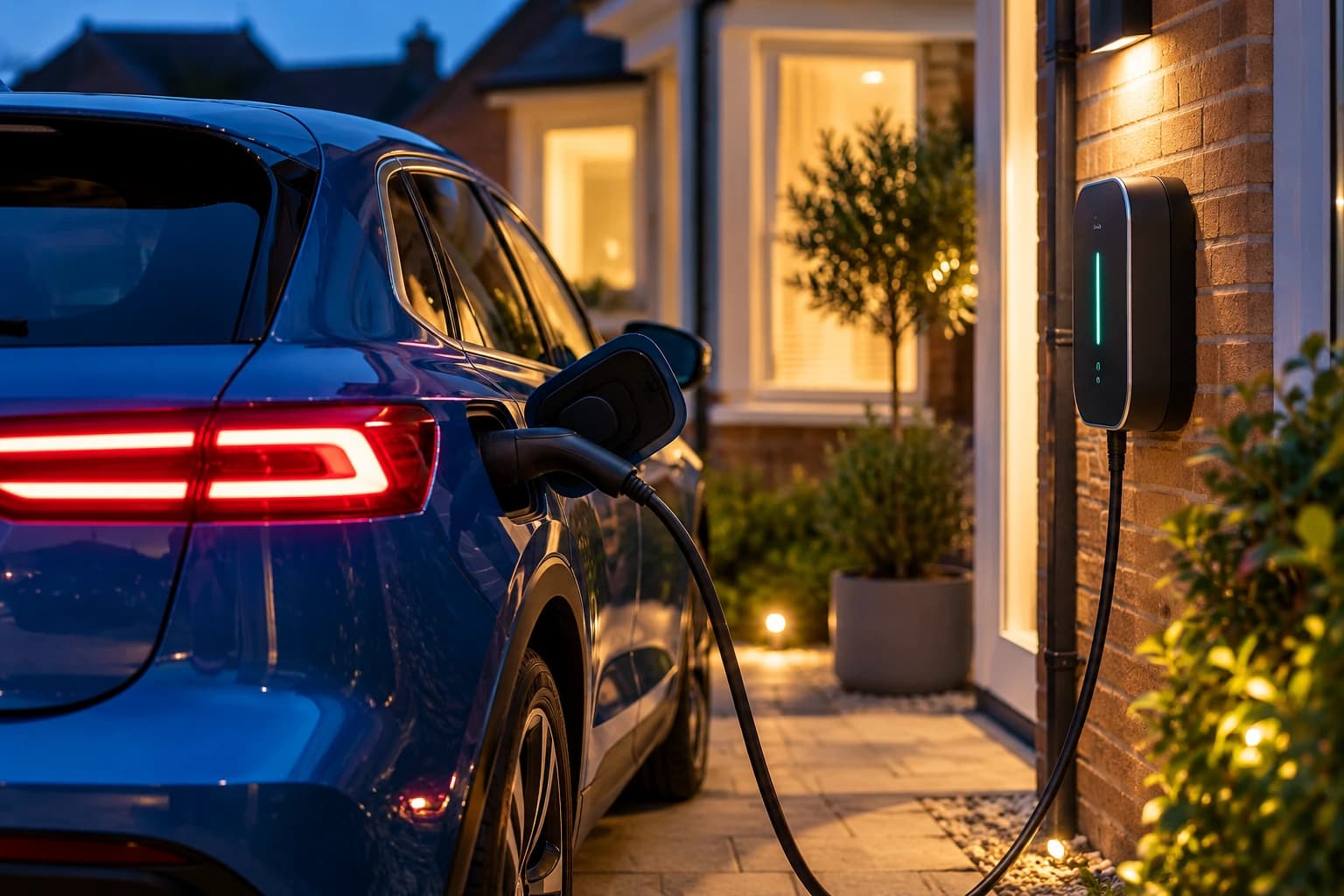
The cost of a home charge is the energy you put in, times the price of that energy. This guide explains where the price comes from, why your meter reads more than the car gained, and what a charge does not include.
Last reviewed
Cable or socket, and which suits your parking
Tethered vs untethered EV chargers: which is right for you?
Both charge at the same speed. One has a cable permanently attached and the other is a socket you plug into. The difference is how you use it every day and where the cable lives.
Last reviewed
Which speed your home and car can actually use
7 kW vs 22 kW home EV chargers: what is the difference?
Check your home's supply and your car's AC limit before paying for a higher charger rating. Understand when 7 kW is sufficient and what 22 kW actually needs.
Last reviewed
The visit, the paperwork and what can change the price
Home EV charger installation: survey to handover
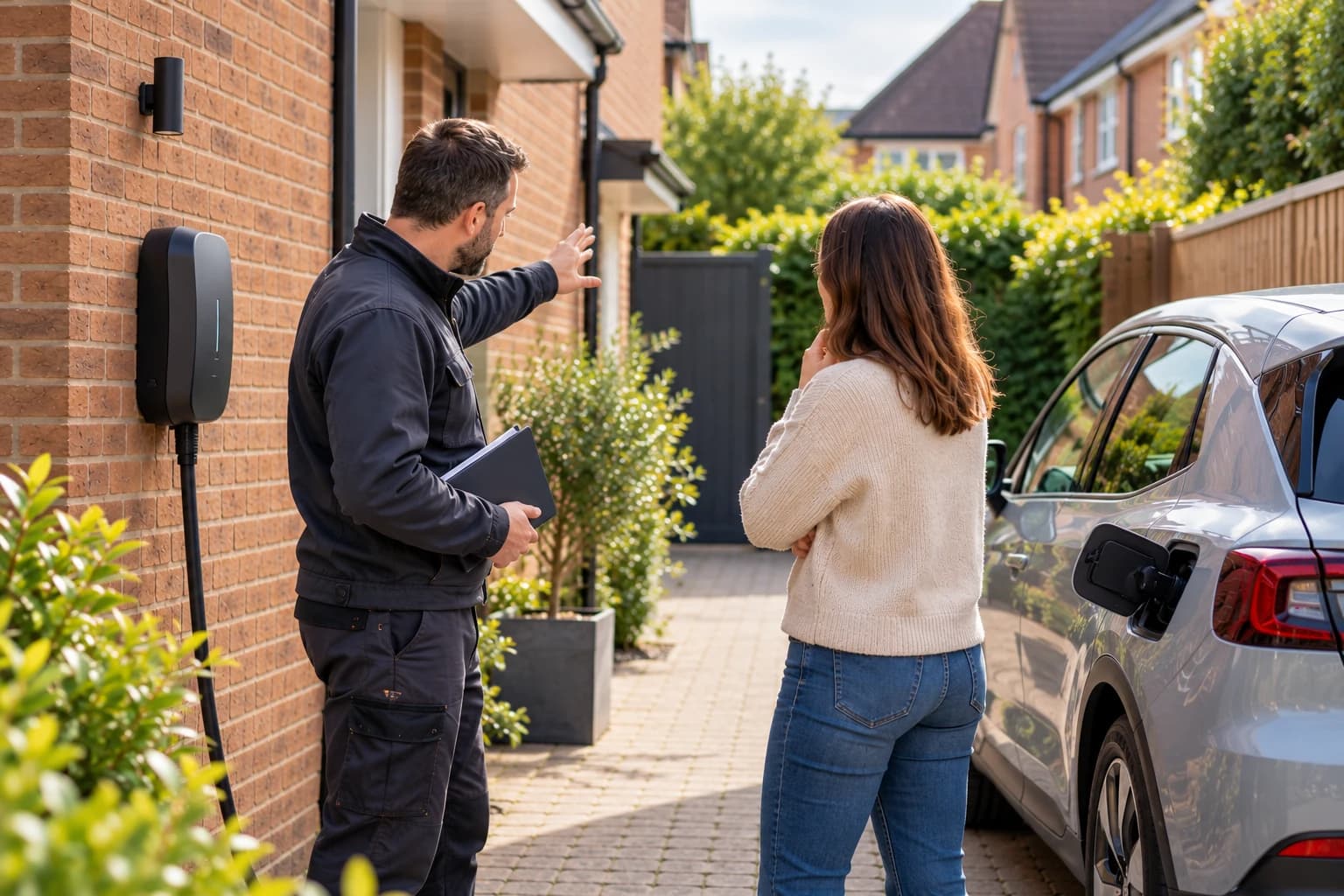
An installer checks your supply, runs a dedicated cable from your consumer unit, fits the charger and hands over certificates. Here is the order it happens in and what you should ask for.
Last reviewed
The plug your car uses, and why it is everywhere
What is a Type 2 EV charger connector?
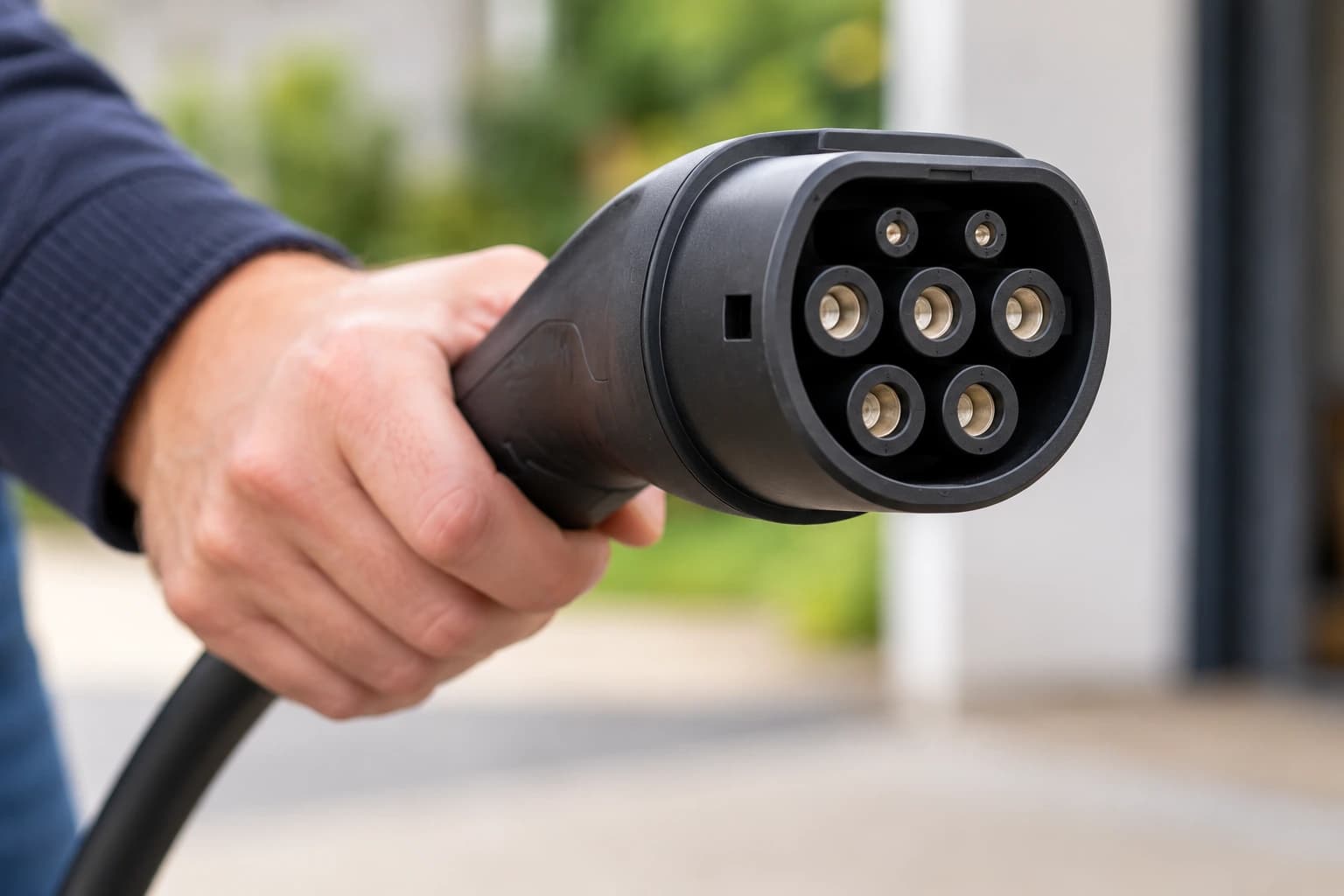
Type 2 is the seven-pin plug used for home and most public AC charging in the UK. Nearly every electric car sold here uses it, so it is rarely the thing that decides your charger.
Last reviewed
The order to decide things in, and the questions to ask
How to choose a home EV charger in the UK
Check what your supply and car support before you look at features, because paying for speed you cannot use is the most common expensive mistake. Then narrow the choice in a sensible order.
Last reviewed
Sharing your home's electricity supply
Do I need load balancing for a home EV charger?
What load balancing does, when it can help, and what to ask an installer about monitoring, power limits and shared supplies.
Last reviewed
Parking, permission and practical alternatives
Can I install an EV charger without a driveway?

Understand allocated parking, council-approved pavement channels and shared or public charging before paying for a home charger.
Last reviewed
Understand your supply before considering an upgrade
Single-phase vs three-phase EV charging at home
What phases mean, why your car still sets a limit, and how to discuss supply capacity or an upgrade with an installer and network operator.
Last reviewed
Find the limit before blaming the charger
Why is my EV charging slower than expected?
Check your car's AC limit, schedules, load balancing, temperature and charge level using a safe, repeatable troubleshooting process.
Last reviewed
Compare the scope of quotes, not just the headline price
How much does it cost to install a home EV charger?
Separate the charger from the installation, recognise exclusions and extra work, and check current grant eligibility before budgeting.
Last reviewed
Why meter energy and battery energy differ
EV charging losses explained
Follow the energy from your meter to the battery, distinguish measurement boundaries, and make charging-cost estimates without guessing a loss percentage.
Last reviewed
When solar helps and what surplus charging needs
Can I use solar panels to charge my EV at home?

Understand household demand, solar surplus, grid top-ups and battery priorities before assuming a charger can follow your panels.
Last reviewed
Prepare for the appointment and leave with a working charger
EV charger installation day: what to expect
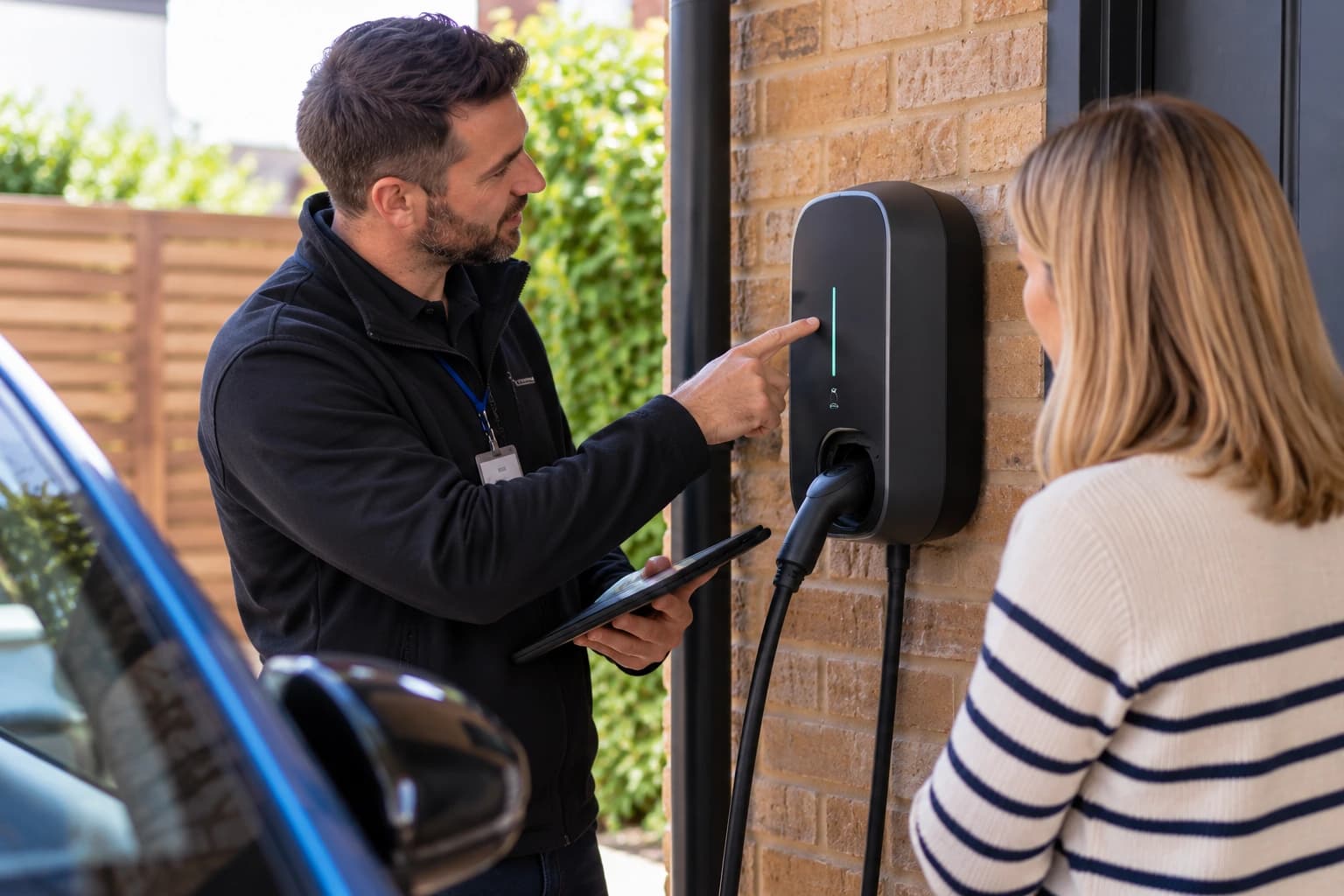
A practical installation-day walkthrough: access, agreed cable route, testing, app setup, demonstration and the handover information to keep.
Last reviewed
A dedicated circuit is not the same as a separate fuse box
Does an EV charger need its own consumer unit?
Understand the difference between a circuit and a consumer unit, why existing equipment needs assessment, and how to question an installation quote.
Last reviewed
Portable charging, socket suitability and safer choices
Can I charge an EV from a normal 3-pin plug?
What a manufacturer-approved portable charging cable does, why a normal socket is not automatically suitable, and when to ask an electrician.
Last reviewed
Why cable size needs a design, not a shopping shortcut
What size cable does a home EV charger need?
How charging demand, route length, installation method and protection affect the supply cable, without prescribing a universal cable or breaker size.
Last reviewed
Planning, property consent and pavement permission are separate
Do I need planning permission for an EV charger?
Check the rules for your UK nation, property and proposed location, and understand why planning permission is not the only approval that may matter.
Last reviewed
Follow your exact car, not a universal battery rule
Should I charge my EV to 80% or 100%?
Separate everyday charging from trip preparation, understand usable capacity and battery chemistry, and apply current manufacturer guidance to your vehicle.
Last reviewed
Compare access, charging type, time and the complete cost
Home charging vs public charging: what is the difference?
Understand home AC, public AC and rapid DC charging, operator fees and parking rules, and build a practical charging routine without assuming one universal price.
Last reviewed
Charging times, battery versions and whether 22 kW helps
Tesla Model 3 home charging in the UK
Understand Model 3 Type 2 charging, source-estimated battery capacities, 7.4/11 kW limits and an overnight routine without confusing home charging with Supercharging.
Last reviewed
Choose a charger for your parking and daily top-ups
Tesla Model Y home charging in the UK
Plan Model Y cable reach, shared parking and daily charging. Compare conditional time estimates across the represented battery versions and avoid paying for unusable AC power.
Last reviewed
Compare the two battery sizes and Kia's published charge times
Kia EV3 home charging: time, power and cost
Separate EV3 stated battery capacity from usable capacity, understand Kia's 10–100% AC timings, and use labelled estimates for 20–80% top-ups and charging costs.
Last reviewed
Enyaq 60 and 85 usable batteries and overnight charging
Skoda Enyaq home charging: 7 kW vs 11 kW
Use the manufacturer's net battery figures for Enyaq 60/85 estimates, compare 7.4 kW with three-phase 11 kW, and distinguish calculated times from Skoda's published timings.
Last reviewed
Who can apply for the current £500-capped grant?
EV charger grant for renters and flat owners
Check current OZEV eligibility, the 75% award capped at £500, parking permissions, evidence and the requirement to wait for approval before installation.
Last reviewed
One charger or two, shared power and cheap-rate windows
Charging two electric cars at home
Compare alternating one charger with two charging points, estimate the combined overnight requirement, and understand why two 7 kW units do not guarantee 14 kW of available supply.
Last reviewed
Plan the route, electrical survey, connectivity and full quote
EV charger in a detached garage or on a long cable run
What to ask about a remote garage or garden charging position: route length, voltage drop, groundwork, restoring surfaces and data connections, without DIY cable sizing.
Last reviewed
Which suits your tariff, solar panels and installation?
Ohme Home Pro vs myenergi zappi
Compare verified Home Pro and zappi connection, AC power, solar controls, connectivity and tariff features. A balanced choice by household needs, without a manufactured winner.
Last reviewed