Guide
Can I install an EV charger without a driveway?
Sometimes. An allocated off-street space or an approved cross-pavement arrangement may make it possible. Ordinary on-street parking does not automatically give you permission to run a cable from your house, and buying a charger does not reserve the space outside.
In plain English
Start with the parking arrangement
“No driveway” describes several different situations. You might have an allocated bay behind a block of flats, a garage away from the house, an unallocated communal car park, or only public-road parking. Each raises different questions about permission, the electricity connection and access to the car.
Write down where you normally park, who controls that land and whether the space is yours to use exclusively. A place near your front door is not necessarily part of your property. Equally, a space separated from the house might still be usable if the rights, cable route and electrical design can be agreed.
The first useful enquiry is about the parking and route, not which charger to buy. A photograph and a simple sketch can help an installer or managing agent understand the problem. They do not establish ownership or permission by themselves.
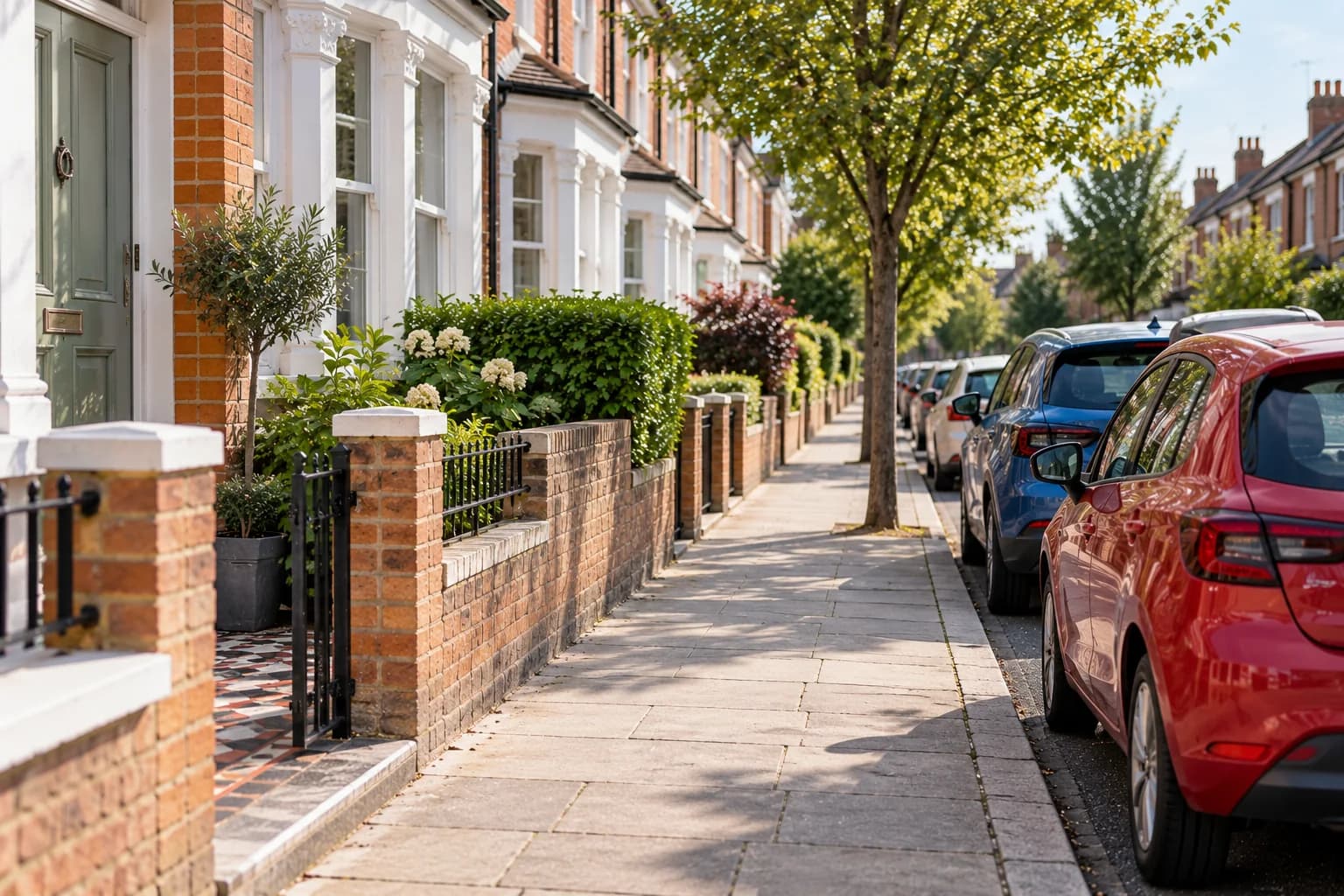
In plain English
Cross-pavement charging depends on local approval
A cross-pavement solution, such as an installed cable channel, provides a managed route between the property and the road. It is not the same thing as laying a loose cable across the footway and covering it with a mat.
Department for Transport cross-pavement guidance applies to England: the local highway authority decides whether to allow a particular channel or other approved route. Contact the council or roads authority before arranging work; planning permission may also be required. Not every council approves these solutions, and arrangements differ across the UK.
Do not install a channel in the public highway yourself. Get the authority’s process, approved arrangements and responsibility for maintenance in writing before paying for equipment. Ask how pedestrians, wheelchair users and people with pushchairs are accommodated, and whether the route remains usable when your car is not charging.
In plain English
The current grant for on-street parking
As checked on 6 October 2026, the separate OZEV on-street household scheme offers 75% of eligible chargepoint purchase and installation costs, up to £500, with funding listed to 31 March 2027. It requires a non-temporary cross-pavement solution, adequate lawful on-street parking, an eligible vehicle and highways consent. Planning permission is also needed where applicable.
Apply and wait for OZEV’s eligibility notification before installing; the grant cannot be backdated. The installer claims an approved grant and deducts it from the eligible invoice. Check the live official rules before booking. The separate renters and flat owners grant has different parking and tenure requirements.
Most importantly, the scheme explicitly does not give ownership, exclusive use or reserved access to a parking space. If someone else parks outside, the charger may be unavailable to you. Consider that everyday uncertainty before committing to the installation.
In plain English
A workable charging routine may use other locations
If home charging is not feasible, map charging opportunities around where the car already spends time: a workplace, a nearby public charger or a regular destination. Check the actual operator’s tariff, access rules and parking restrictions rather than assuming a nearby plug is always available.
Look beyond the electricity unit rate. A parking fee, connection fee, time limit or unreliable access can change how useful a location is. Try the routine before relying on it: can you reach it on the days you need, and is the cable or connector suitable for your car?
Electrical Safety First recommends dedicated charging equipment and competent installation. Do not treat a household extension lead through a window as a substitute for an assessed installation or an approved pavement arrangement. Ask for professional advice if the proposed route creates a trip hazard or depends on improvised equipment.
Your next step
What this means for you
- Establish who controls the parking space and every part of the cable route.
- Ask your landlord or managing agent about existing charging plans.
- For a pavement crossing, speak to the relevant highways and planning authorities before ordering.
- Check grant eligibility before installation, not afterwards.
- Keep an alternative charging plan if on-street parking is uncertain.
Once those questions are answered, our installation overview and installation-cost guide help you prepare for a survey and quote. Use the compatibility guide to check your car and connector; parking permission does not determine charging speed.
Further reading
Sources
- Last reviewed
- Cross-pavement charging solutions — Department for Transport / OZEV. England-only policy, local approval, maintenance and parking arrangements. Its older grant figure is superseded by the April 2026 scheme guidance.
- Households with on-street parking: eligibility, amount and dates — GOV.UK Find a grant / OZEV. Current 75% of eligible costs, up to £500, cross-pavement conditions and 31 March 2027 closing date; checked 6 October 2026.
- Electrical safety advice for electric vehicles — Electrical Safety First. Dedicated charging equipment, competent installation and stopping use of damaged charging cables.
- Electric vehicles: cost, time and what's involved — UK Power Networks. Supply assessment, installer notification and site-specific network work. UK Power Networks' process applies in its own service area; other operators have their own arrangements.